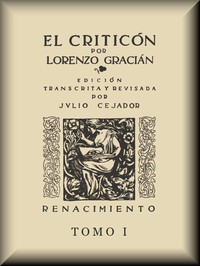
El criticón (tomo 1 de 2) by Baltasar Gracián y Morales
I'll be honest, picking up a 17th-century Spanish philosophical novel sounds like homework. But El criticón is anything but dry. It's a lively, often satirical journey that feels fresher than it has any right to.
The Story
We meet two polar opposites. Critilo is a worldly, disillusioned man stranded on an island. Andrenio is a feral child raised by animals, experiencing everything for the first time. When their paths cross, they form an unlikely partnership. Critilo becomes the guide, Andrenio the wide-eyed student. They set off for the 'Court of Rome,' a symbol of ultimate wisdom and civilization. Their route, however, is a winding tour through the landscape of human failure. They encounter allegorical figures representing every vice and vanity you can imagine—the hypocrite, the flatterer, the greedy merchant, the pompous fool. Each encounter is a short, pointed story where our heroes learn (often the hard way) how not to live.
Why You Should Read It
What grabbed me was the book's sneaky humor. Gracián isn't just lecturing; he's putting on a show. Watching Andrenio's genuine shock at the absurdity of 'civilized' customs makes you see our own world with new eyes. Why do we chase status? Why do we lie to ourselves? The dialogue between the naive and the experienced is a brilliant device. It lets Gracián critique society without being preachy. You're learning alongside Andrenio. The prose is dense with meaning—every sentence is crafted—but the chapters are short and episodic, making it perfect for slow, thoughtful reading. It’s less a linear plot and more a series of brilliant, connected sketches about the human condition.
Final Verdict
This is not a book for a rushed beach day. It’s for the reader who enjoys chewing on big ideas, who likes their wisdom served with a side of wit. If you enjoyed the allegorical journeys in Pilgrim's Progress or the sharp social observations of Candide, you'll find a fascinating ancestor here. It's perfect for philosophy lovers, fans of classic literature that doesn't take itself too seriously, and anyone who's ever looked at the world and thought, 'Are we the crazy ones?' A rewarding, insightful read that proves some questions are timeless.