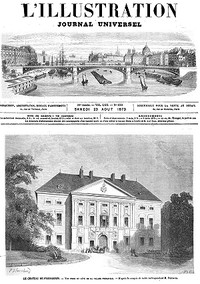
L'Illustration, No. 1591, 23 Août 1873 by Various
Let's be clear: this isn't a book in the traditional sense. L'Illustration, No. 1591 is a complete weekly magazine from late August 1873. There's no single plot. Instead, it offers a dozen windows into that moment. You get a long, gripping feature on the Great Chicago Fire of 1871, which was still a fresh and shocking memory. It reads like modern disaster reporting, analyzing the causes and the heroic response. Alongside that, there are articles on the Carlist Wars in Spain, updates on railway expansions across Europe, and even notes on society events.
The Story
There is no story, but there is a compelling narrative flow created by the editors. They guide you from global tragedies to scientific progress, from war to culture. The 'characters' are the nations, cities, and inventors of the era. The tension comes from the contrast between articles—the raw destruction in Chicago sits opposite polished ads for the latest luxury goods. It shows a world trying to understand itself through news, where a fire in America and a war in Spain felt immediate to a reader in Paris thanks to new printing and telegraph technologies.
Why You Should Read It
I loved this for its sheer authenticity. History books summarize and analyze, but this is the raw material. The ads tell you what people wanted to buy. the typefaces and layout show what they found visually engaging. The tone of the Chicago fire article mixes horror with a real sense of awe at the scale of the disaster. You're not being told how people felt; you're reading what they actually read, which is far more powerful. It removes a century of hindsight and lets the era speak for itself, with all its biases, curiosities, and priorities intact.
Final Verdict
Perfect for history buffs who are tired of textbooks, for writers seeking genuine period detail, or for any curious reader who enjoys primary sources. If you like the idea of literary archaeology—dusting off a single week and examining its layers—you'll be captivated. It's a slow, immersive experience, not a page-turner. Think of it as the most detailed, original historical documentary you could ever find, printed on fragile, yellowing paper.