
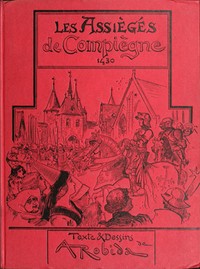
Les assiègés de Compiègne, 1430 by Albert Robida
Albert Robida's Les assiègés de Compiègne, 1430 drops you right into the chaos of a medieval city under threat. The year is 1430. Joan of Arc has just been captured by the Burgundians, and the French town of Compiègne, which she helped defend, now finds itself isolated and surrounded by the army of the Duke of Burgundy, an ally of the English. The gates are shut, the walls are manned, and everyone inside is holding their breath.
The Story
The plot follows the town during this tense, uncertain siege. We don't just follow generals and nobles. Robida takes us into the homes and streets, showing us how ordinary people cope. We see the dwindling food supplies, the spread of disease, and the constant, grinding anxiety of waiting for an attack or a miracle. The central conflict isn't a single battle; it's the collective spirit of a community pushed to its limits. Will they surrender, starve, or find a way to break the siege? The drama comes from the clashes between hope and despair, courage and self-interest, playing out in taverns, on the ramparts, and in crowded households.
Why You Should Read It
What makes this book special is its incredible sense of atmosphere. Robida was a master illustrator (he even did his own editions), and that visual talent translates into vivid, bustling scenes. You can almost smell the crowded streets and hear the tension in people's voices. He makes history feel immediate and human. This isn't a story about glorious heroes; it's about the stubborn resilience of a whole town. You get attached to these characters—the bickering neighbors, the weary soldiers, the clever kids—because their struggles feel so real. It’s a powerful look at how people find humor, love, and courage even in the darkest times.
Final Verdict
This book is perfect for anyone who thinks they don't like 'old' historical fiction. It reads with a surprising modern energy. If you enjoy stories about community survival, rich historical atmosphere, and character-driven drama more than sword-clashing action, you'll love it. It's a hidden treasure for fans of authors like Ken Follett who focus on the human scale of big historical events, and a must-read for anyone fascinated by the messy, vibrant reality of life in the Middle Ages.

George Scott
8 months agoSolid story.